S u n
The sun is the largest body in the entire solar system, keeps all other bodies spinning around thanks to its great mass that generates gravity. About three quarters of the Sun's mass consists of hydrogen; The rest is mainly helium, with much smaller amounts of elements, including oxygen, carbon, neon and iron.

It is a nearly perfect sphere of hot plasma, with internal convectivemotion that generates a magnetic field via a dynamo process. It is by far the most important source of energy for life on Earth. Its diameter is about 109 times that of Earth, and its mass is about 330,000 times that of Earth, accounting for about 99.86% of the total mass of the Solar System
M e r c u r y
Mercury is the planet of the solar system closest to the Sun and the smallest. It is part of the so-called inner or terrestrial planets and lacks satellites like Venus. Mercury has a diameter of 4,879.4 km. It is very similar to our moon, with a full surface of craters, although with hills and depressions. It has cliffs of up to 3 kilometers in height. Mercury has no moon, and it's a very fast planet.
Mercury's atmosphere is very light. It consists mainly of helium, a little argon and neon. The atoms of these gases are dispersed into space because of the high temperature that reaches the surface of the planet.


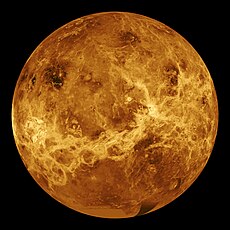
V e n u s
It is the second inner planet. It is the most luminous body after the sun and moon, so much, that can be seen in broad daylight. Venus is very similar to Earth in size (has a diameter of 12.103,6 km), mass and shape, although it has a very slow rotation.
With its rotation period of 243 days and an orbital period of 225 days Venus day is longer than its year. An additional effect of this slow motion is that the planet almost always shows the same face towards Earth.
E a r t h
The Earth owns a unique natural satellite, unlike Jupiter and Saturn that they have thirteen and ten, respectively. The Moon, 384,000 km away, describes an almost circular movement around our planet. Its size is fifty times smaller than that of the terrestrial globe. Like the Sun, the Earth also has gravity.
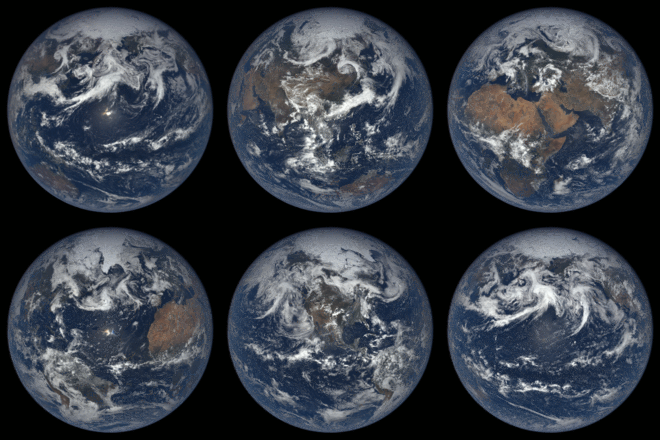
Earth is the third planet from the Sun and the only object in the Universe known to harbor life. According to radiometric dating and other sources of evidence, Earth formed over 4 billion years ago.
M a r s
It is a smaller body than the Earth, has two small and opaque moons orbiting very close to its surface. It has a diameter of 6,794.4 km. Its atmosphere presents clouds and fog, caused by the condensation and evaporation of the water. This water forms layers of ice in the poles that during summer are reduced. It is understood that in the past, on the planet Mars, there was an extensive system of rivers. The surface of Mars shows numerous craters. It has desert or arid zones very similar to those of the Earth. In the crust of Mars geological faults are observed, the largest being the Africa Fault.

JUPITER
Jupiter is the largest planet of the Solar System, has a diameter more than 11 times greater than the terrestrial one. The observation of Jupiter through the telescope is very spectacular. Jupiter basically has two types of characteristics: the dark ones (belts) and the bright ones (zones). The amount of observable details depends on the instruments used (quality, collimation) and sky conditions at that time. Jupiter is the largest planet in the Solar System. It is mainly gaseous, mostly Hydrogen, with a dense and turbulent atmosphere where thousands of storms are generated able to contain a planet like the Earth in its interior.

SATURN
It is the second largest planet in the Solar System, and the one with the brightest rings to be observed. When observing Saturn, you should note the inclination of the rings, the shadow they cast on the planet's atmosphere and the planet's shadow on the rings, perfectly visible on dates close to quadrature. The number of visible moons depends on the telescope used, but under acceptable conditions a reflector of 114 mm [4.5 inches] in diameter shows a minimum of 2 or 3 moons. The largest is Titan, the second largest in the Solar System and the only one with an even denser atmosphere than Earth.

URANUS
Uranus has a characteristic green color when viewed with a telescope. It has several moons orbiting around it, but they are reserved for older equipment because of its low brightness. Even so the specialized publications carry out ephemeris works for the location of the satellites and several softwares represent them graphically. Its angular diameter of only a few seconds of arc allows to appreciate a small surface of this planet using some increase. With some increase in a medium diameter telescope (ex: 200 mm, 150x) you will be able to distinguish a small disk of discernible size, which differentiates it from the stars.

NEPTUNE
Neptune shows a bluish color when viewed with a telescope. It has several moons orbiting around it, but they are reserved for older equipment because of its low brightness. Ephemeris works for the location of the satellites can be found in specialized publications. The angular diameter of only a few seconds of arc allows us to appreciate a small disk of this planet when we use some increase. Epitun was discovered on September 23, 1846 thanks to the calculations made by Urbain Jean Joseph Leverrier (1811-1877) and John Couch Adams (1819-1892)


No hay comentarios.:
Publicar un comentario